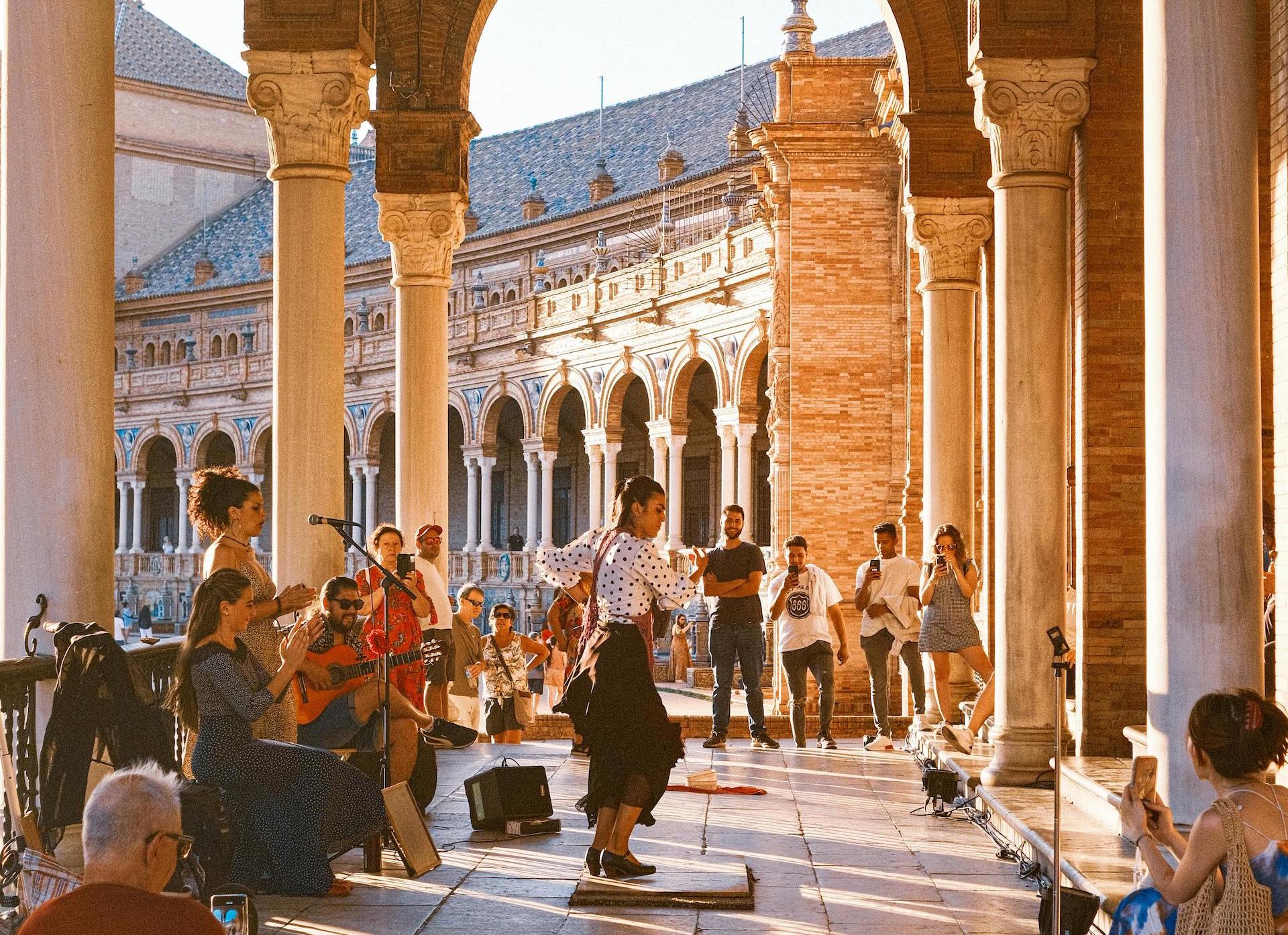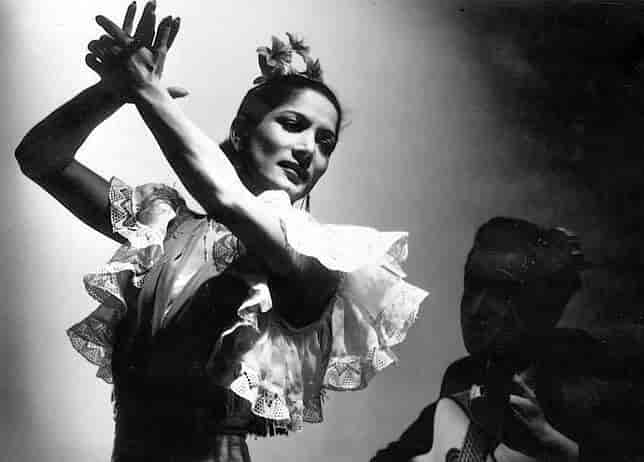
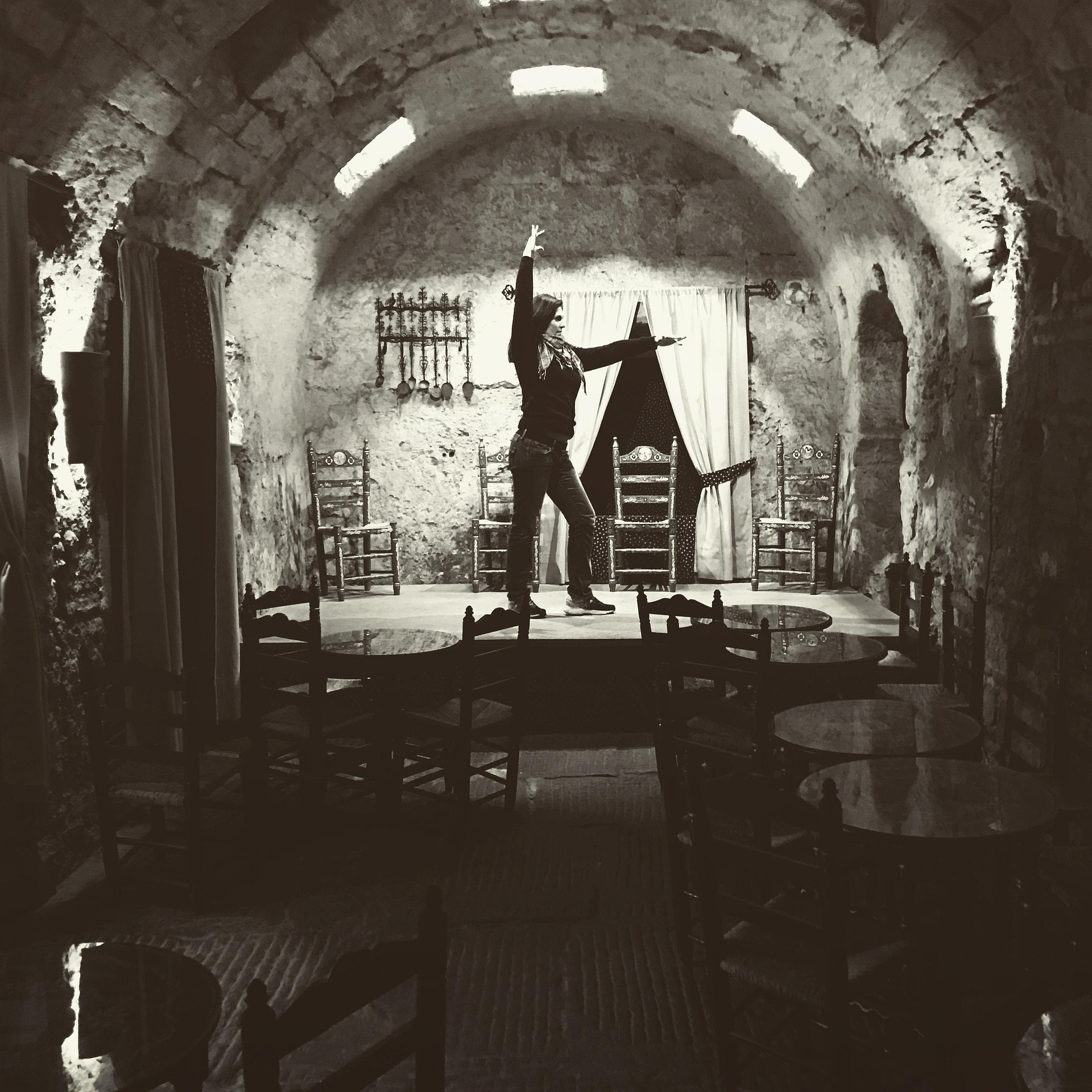
There’s a particular light in Andalucía in spring that makes everything look like it’s about to start singing.
It’s not the postcard light. Not the blinding summer glare that flattens everything into dust and sweat. This is softer. Longer evenings. Air that still carries a bit of coolness. The kind of light that makes you walk slower without meaning to. The kind that makes you hear things before you see them.
Spring is when flamenco starts leaking back out into the streets.
Not in the “tourist season is here” way. In the quieter way. In the way where you pass a bar with the door half open and there’s a guitar inside, not amplified, not performing, just… being used. In the way where someone is clapping compás at a table and nobody’s watching because nobody needs to.
I’ve learned to follow flamenco the way you follow weather.
You don’t chase the big storms. You watch for the signs.
The Season of Almost-Festivals
Spring in Andalucía is full of events that are not quite festivals and not quite normal life either. Things hover. Rehearsals spill into streets. Dancers test shoes on cobbles. Singers save their voices during the day and then forget all about that at night.
In Jerez, everything feels like it’s warming up for something, even when the big banners aren’t up yet. In Seville, you can feel Feria in the bones weeks before it arrives. In Málaga, Córdoba, Granada, there’s that sense that everyone is about to be very busy, but for now they still have time to sit.
This is the moment I like best.
Before flamenco becomes a programme.
Before it becomes something you buy a ticket for and sit in a chair to receive.
In spring, you still have to go looking for it. And that’s how it should be.
About Big Events (And Why I Rarely Go to Them)
Yes, there are famous dates. You can Google them. Festival de Jerez. Feria de Abril. Noche Blanca del Flamenco. They’re real, and they’re good, and they matter.
But they’re also loud in a way that isn’t always helpful.
I don’t mean loud in sound. I mean loud in intention.
Everything is announced. Everything is scheduled. Everything is explained.
There are moments of brilliance, of course. There always are. But I’ve learned that for me, flamenco is not at its best when it knows it’s being watched.
If you go to these events, go for the edges. Go early. Go late. Go to the places that don’t have the biggest posters. Go to the bars nearby, not the main stages. Listen for clapping that doesn’t sound organised.
That’s usually where the real night is happening.
The Places That Don’t Call Themselves Tablaos
Some of the best flamenco I’ve ever seen wasn’t in a tablao at all.
It was in a bar with bad lighting and a coffee machine that screamed every ten minutes. It was in a peña where someone’s uncle was definitely supposed to be singing but had lost his voice and sang anyway. It was in a back room where three people argued about the tempo for twenty minutes and then played like their lives depended on it.
Spring is good for these places because people are less tired than in summer, less wrapped up in winter routines, and not yet overwhelmed by the heat.
If you want to find them, don’t search online.
Ask.
Ask the bartender. Ask the woman who looks like she knows everyone. Ask the guitarist after he’s finished playing and had a drink. Ask badly in Spanish if you have to. It’s fine. That’s part of it.
Sometimes they’ll tell you. Sometimes they won’t. Both answers are normal.
The Tablao Question
I’m not against tablaos. I’m just picky.
There are good ones. There are very good ones. And there are others that feel like flamenco is being served in courses.
If you go in spring, try to go on a weeknight. Try to avoid the “early show.” Try to sit somewhere you can see the musicians breathe.
Watch the guitarist’s left hand. Watch the singer’s shoulders. Watch the dancer before they start, not when they’re already performing.
If it feels like a performance that could only happen exactly like this, on exactly this night, with exactly these people, you’re in the right place.
If it feels like it will happen again in forty-five minutes for a new audience, you probably aren’t.
What I Carry With Me
Spring evenings lie. They tell you it will stay warm. It won’t.
I always bring something for the cold, even when I don’t think I’ll need it.
I bring shoes that can survive both dancing and standing around waiting. I bring a small notebook that I almost never write in, but like having. I bring a phone and then try not to use it.
And I bring patience.
Flamenco doesn’t run on your schedule. That’s part of the lesson.
Following the Rhythm, Not the Map
Some trips you plan by destinations.
Some you plan by moods.
Spring flamenco trips are mood trips.
You go to a city because someone mentioned a singer. You stay an extra night because someone said, “Maybe tomorrow.” You leave because it feels finished, not because your calendar says so.
The best nights are rarely the ones you expected.
They start late. They end badly. Or beautifully. Or both.
And you walk home with that strange quiet inside you that only comes from having listened properly.
A Small, Unfashionable Thought
Flamenco doesn’t need us.
It doesn’t need to be discovered. It doesn’t need to be promoted. It doesn’t need to be improved.
We’re the ones who need it.
Spring just makes it easier to remember.