There’s a moment that happens in flamenco that people who’ve only watched it on holiday rarely notice.
It isn’t the footwork.
It isn’t the spin.
It isn’t even the dramatic stare that makes half the audience shift in their seats.
It’s the silence.
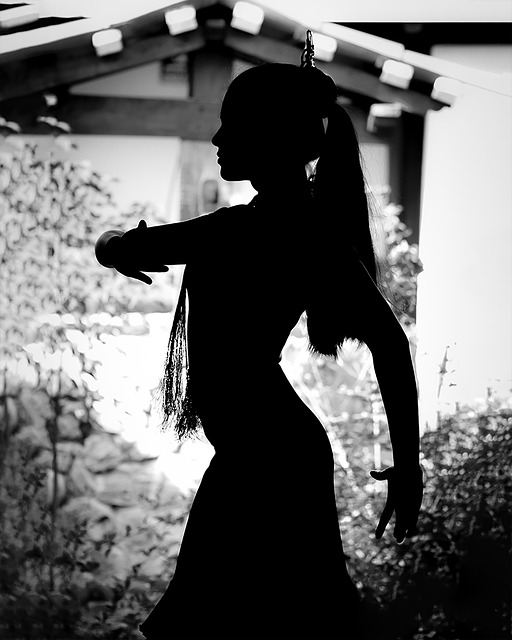
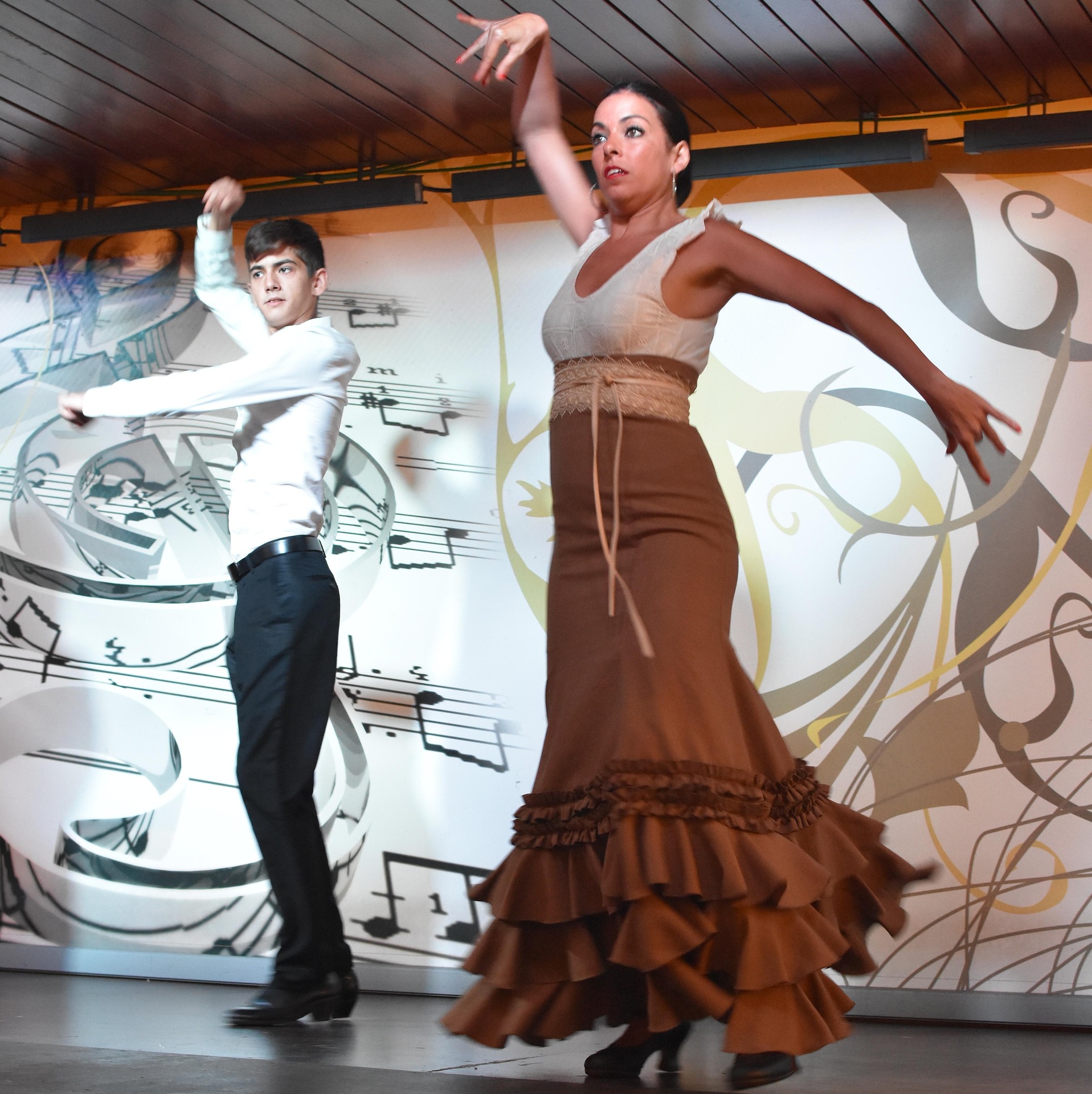
A singer draws out a line that sounds like it’s coming from somewhere underground. The guitarist pauses half a beat longer than expected. The dancer freezes, weight on one heel, fingers hovering in the air as if she’s listening to something the rest of us can’t hear.
And then the floor explodes.
That was the moment I realised flamenco isn’t really a dance at all.
It’s a conversation.
Most people think flamenco began as a theatrical Spanish dance. Castanets. Red dresses. Roses in hair.
But the truth is far messier and far more interesting.
Flamenco grew out of the collision of cultures in southern Spain, particularly in Andalusia, where Roma (Gitano) communities mixed with Moorish, Jewish and Andalusian traditions over centuries.
The Roma people arrived in Spain between roughly the 9th and 14th centuries after migrating across Europe from India, bringing musical traditions that slowly blended with local ones.
What came out of that mixture wasn’t just music or dance. It was a way of expressing grief, pride, anger and survival. Some of the deepest styles, called cante jondo, are rooted in the emotional history of the Roma community and their experience of marginalisation.
Which explains why flamenco never feels polite.
When you start learning flamenco, teachers often talk about technique first.
Compás.
Posture.
Zapateado.
But technique is only the scaffolding.
The real thing people are chasing is something the Spanish call duende. Nobody translates it well, because it’s not really translatable. It’s that moment when the performance stops being controlled and becomes something raw and unpredictable.
Sometimes it’s beautiful.
Sometimes it’s uncomfortable.
Sometimes the dancer almost looks like they’re arguing with the music.
I remember watching a dancer in a tiny tablao in Seville years ago. No stage lighting. Just a bare wooden floor and three chairs.
Halfway through a bulería she stopped dancing.
Not as a mistake. As a choice.
She leaned toward the singer, clapped once, laughed, and then launched into the fastest footwork I’d ever heard in my life.
The whole place erupted.
Not because it was perfect.
Because it was alive.
hat’s the secret people miss when they treat flamenco like choreography.
It isn’t supposed to be tidy.
It comes from kitchens, courtyards, weddings, arguments, celebrations, and long nights where someone eventually picks up a guitar and the rest of the room can’t help but respond.
You don’t just dance flamenco.
You interrupt it.
You challenge it.
You wrestle with it.
And if you’re lucky, for a few seconds, it answers back.