Search for flamenco in Granada and eventually someone will tell you to avoid Sacromonte.
“Too touristy.”
“Those cave shows aren’t real flamenco.”
“Go somewhere the locals go.”
This advice is usually delivered by somebody who spent three nights in Granada and now considers themselves the final authority on Gitano cultural life.
The cave shows are certainly sold to tourists. Coaches travel up the hill. Tickets can include a drink, transport and a walk through the Albaicín. Some performances run at the same time every evening because visitors tend to dislike waiting indefinitely for a guitarist to turn up.
None of that proves the flamenco is fake.
The awkward truth is that tourism and tradition have been tangled together in Sacromonte for a long time. Pulling them apart is much harder than reading a few reviews and choosing the venue with the fewest English words on its website.
The caves were homes before they were venues
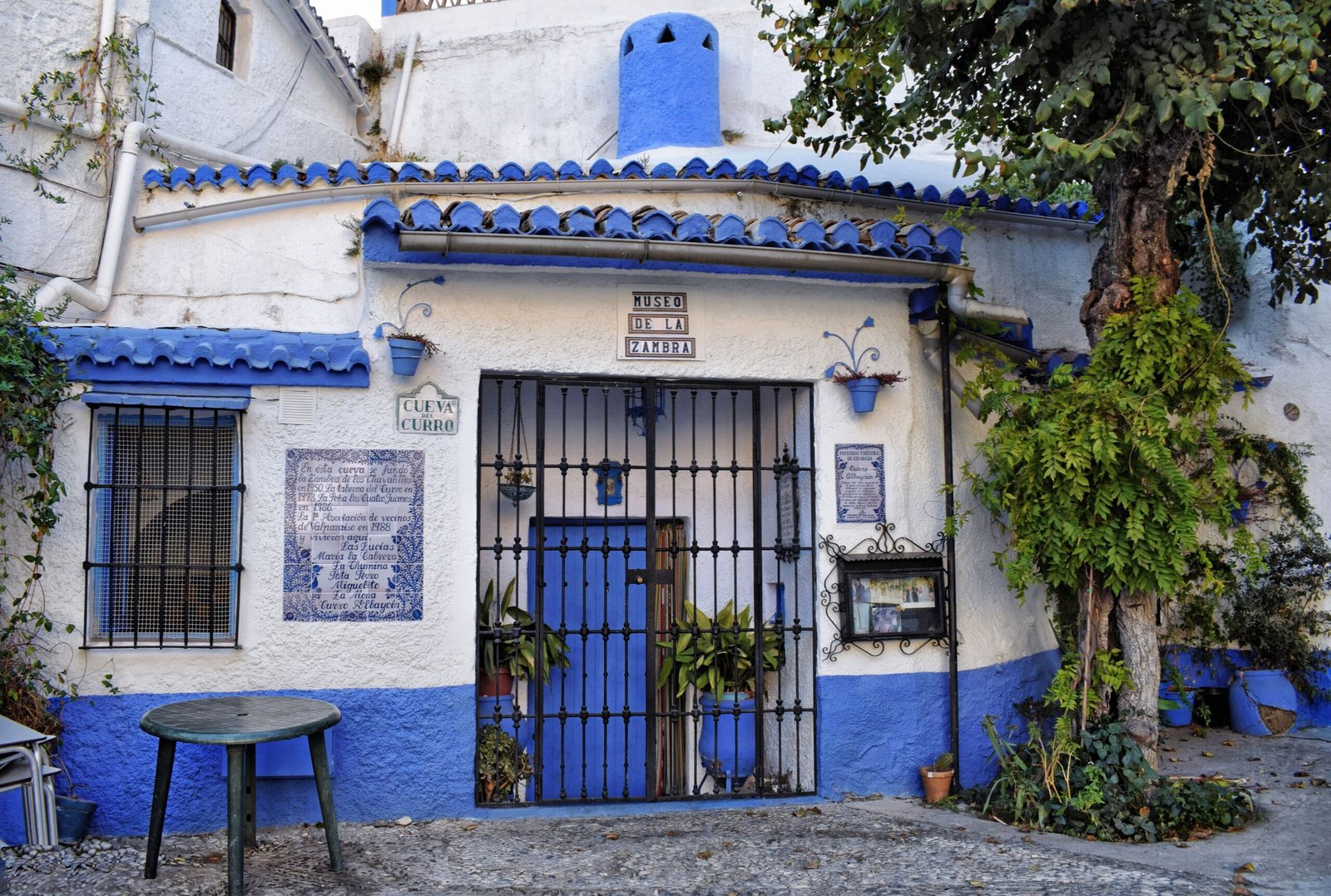
Sacromonte rises above Granada on the opposite side of the valley from the Alhambra. Its whitewashed caves were homes, workshops and gathering places long before anyone thought of selling flamenco tickets online.
Granada’s Gitano community settled in the area after the Christian conquest of the city. Over generations the caves became closely associated with the zambra, a tradition combining music and dance around the rituals of a Gitano wedding.
The performance did not begin on a raised stage.
It took place inside the cave, surrounded by family and guests. The bride’s dance, the groom’s dance and the alboreá formed part of a celebration rather than a programme written for an audience.
That history is one reason the physical setting still matters.
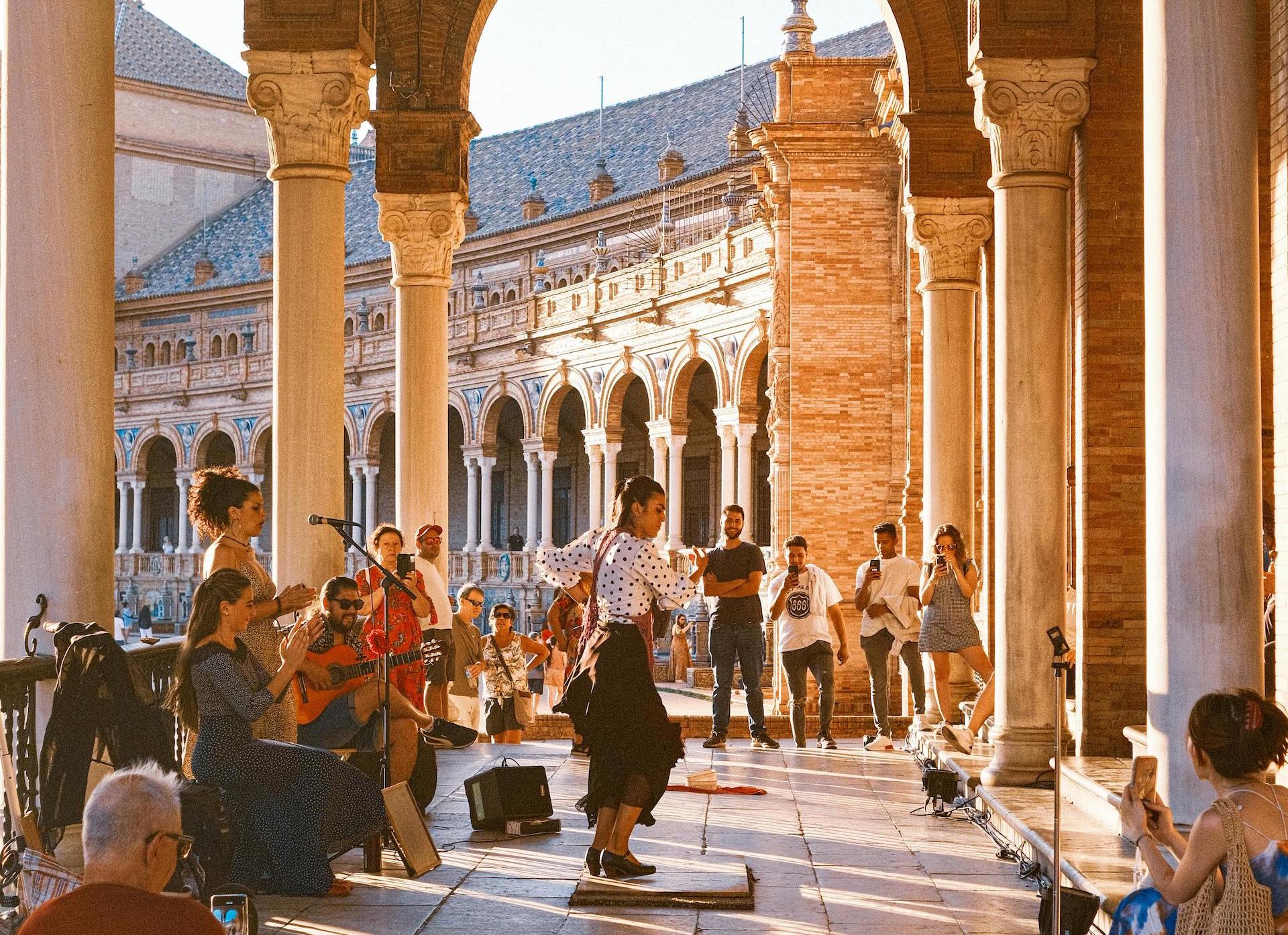
A cave room changes flamenco. The audience sits along the walls with the dancers moving through the space between them. There may be nowhere to look except directly at the performer. Footwork hits the floor and the sound comes back from the walls before you have time to prepare for it.
A large theatre allows flamenco to become spectacle. A Sacromonte cave makes it uncomfortably close.
Tourism did not invent the zambra
The zambra existed before mass tourism reached Granada. It survived official hostility, cultural suppression and periods when traditions connected with Granada’s Moorish past were treated with suspicion.
Gitano families in Sacromonte preserved and reshaped it.
By the middle of the 20th century international visitors were arriving in Spain in far greater numbers. Granada had the Alhambra, Sacromonte had the caves and the zambra had everything the tourism industry thought foreigners wanted from Andalucía.
It was intimate, unfamiliar and easy to photograph.
Cave venues began presenting regular performances to paying visitors. Some became famous. Cueva de la Rocío opened in 1951 and remains associated with the Maya family. The zambra of María la Canastera became another recognised part of Sacromonte’s flamenco history.
Tourism changed the conditions in which the zambra was performed. A wedding tradition became a scheduled show. Performances were shortened and shaped around an audience that might know nothing about flamenco.
It also provided paid work and helped keep the tradition visible.
Both things can be true at once. Flamenco has always changed according to who was listening and who was paying.
A scheduled performance can still be serious flamenco
People sometimes imagine authentic flamenco as something that occurs accidentally after midnight in a bar with no sign outside.
I understand the attraction. I have written before about flamenco away from the obvious tablaos and the nights where nothing appears organised until the music begins.
That does not make organisation the enemy.
Professional performers rehearse. Venues sell tickets. Singers have mortgages. Guitarists generally prefer knowing whether they are working on Thursday.
A dancer does not lose her ability because somebody in the front row arrived on a coach. A singer does not become less Gitano because the audience is holding a printed booking confirmation.
The quality can vary, of course. Some shows lean heavily on familiar poses and rapid bursts of footwork. They give an audience the flamenco it already expects.
Others employ excellent performers who happen to be working in a room full of visitors.
You have to judge what happens in the cave rather than dismissing it from the pavement.
What are you actually watching?
Not every performance advertised as a zambra presents the complete historic wedding sequence.
The word now gets used fairly loosely. It can describe the venue, the evening or the particular Sacromonte style of performance. A show may include tangos, bulerías, soleá and other familiar flamenco forms alongside material associated specifically with the zambra.
That does not automatically make the description dishonest. Traditions rarely stay fixed enough to satisfy the people writing tourism categories.
It does mean visitors should understand that “zambra” can refer to several connected things.
It is a historic Gitano celebration. It is a group of dances associated with wedding rituals. It is a Granada flamenco tradition and it has become the name used by several cave venues presenting flamenco in Sacromonte.
The differences matter if you want to understand why Granada’s flamenco sounds different. They matter less if you are sitting three feet from a dancer and the floor has just started vibrating.
How to avoid the weakest shows
Do not assume the least comfortable or hardest-to-book performance must be the most authentic. Difficulty is not a form of quality control.
Look at who is performing. Established venues should be willing to name their artists or at least explain the kind of programme they present. Reviews are useful when they discuss the singing, guitar and dancing. Complaints about the seats being close together may actually tell you that the room is still arranged as a traditional cave space.
Be cautious when the entire sales pitch is built around passion, seduction and an “unforgettable Spanish night”. That language usually tells you more about the marketing than the performers.
It also helps to know what you want.
If you want a polished stage production, a cave zambra may feel cramped and rough around the edges. If you want an unplanned private gathering, buying a ticket for a nightly show is unlikely to produce one.
A public performance in a historic family venue sits somewhere between those things.
So, is Sacromonte flamenco authentic?
Some of it is excellent. Some of it is ordinary. A few shows probably deserve every accusation thrown at them.
The word “authentic” does not sort them as neatly as people hope.
Sacromonte’s flamenco developed inside a real community. Tourism altered it and helped sustain it. Performers now work within a commercial system built partly around visitors, just as flamenco artists have worked in cafés cantantes, theatres, festivals and tablaos.
A ticket does not erase the history of the cave.
It does not guarantee a good performance either.
Go without expecting a secret ceremony that has somehow waited five centuries for your arrival. Pay attention to the singer as well as the dancer. Watch how the performers listen to each other and whether the rhythm feels alive or merely repeated.
Then decide what you saw.