There is a particular sort of lighting that makes everyone look as though they’ve recently been dug up.
You know the sort. Bright, unforgiving, usually attached to a ceiling that hasn’t seen a paintbrush since Franco was in short trousers. I’ve encountered it in bars, village halls, dance studios and, rather unfortunately, several places charging tourists a small fortune to watch flamenco.
It’s not flattering. And it’s certainly not romantic.
But here’s the odd thing. Some of the best flamenco happens under precisely those conditions.
And some of the worst takes place beneath lighting that probably cost more than my car.
So what exactly is going on?
A Dancer, a Guitarist and One Terrible Light Bulb
Flamenco doesn’t require much in the way of scenery.
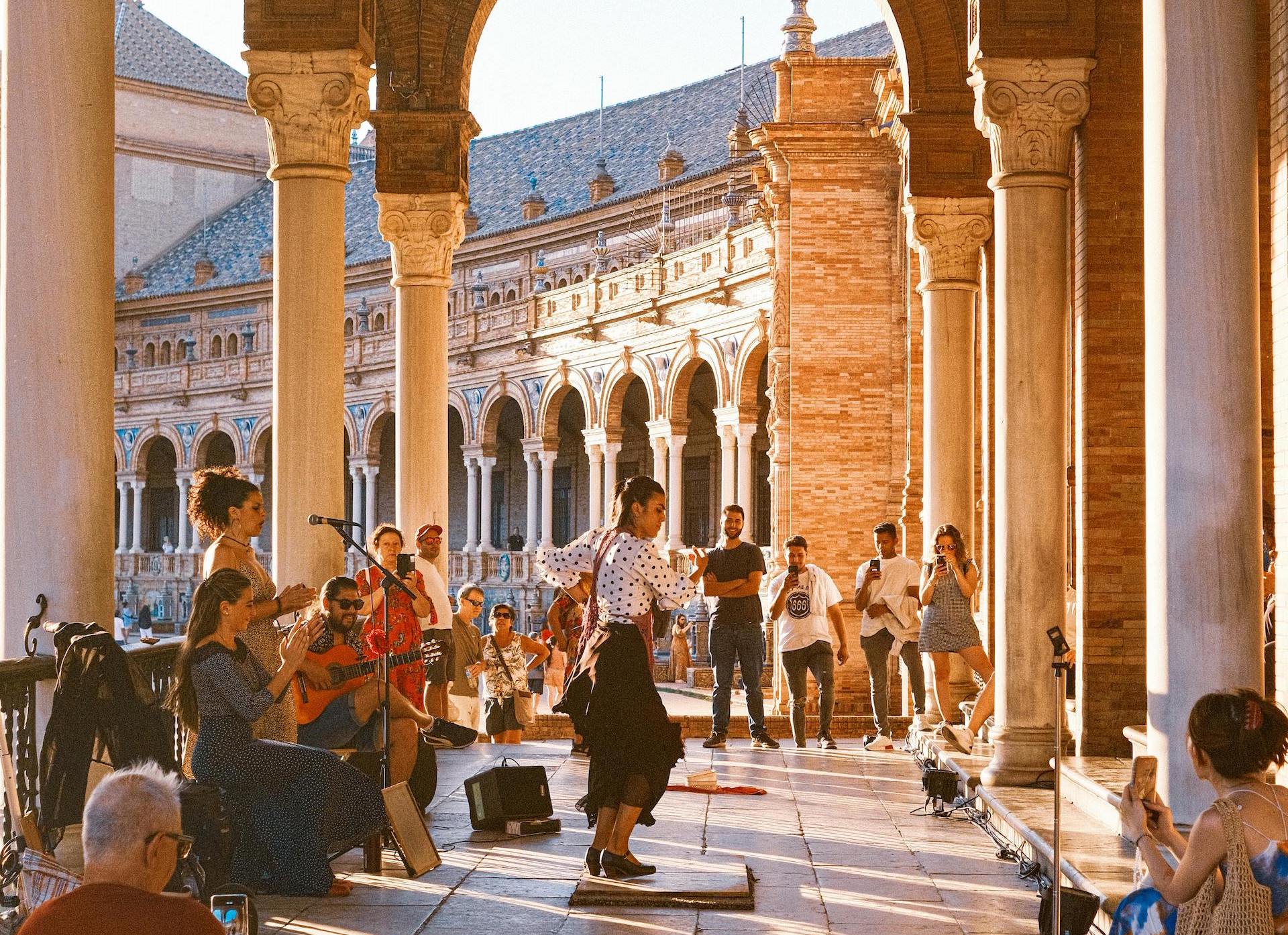
A chair. A guitar. Someone who knows how to sing without making it sound like a performance at the local talent show. A dancer, perhaps, although there are evenings when the singing alone is quite enough.
What it does need is attention.
Not necessarily the sort of attention that comes from sitting in an expensive theatre with a programme balanced on your knees. I mean the uncomfortable, slightly breathless attention you give something when you’re not entirely sure what’s going to happen next.
Lighting can help enormously.
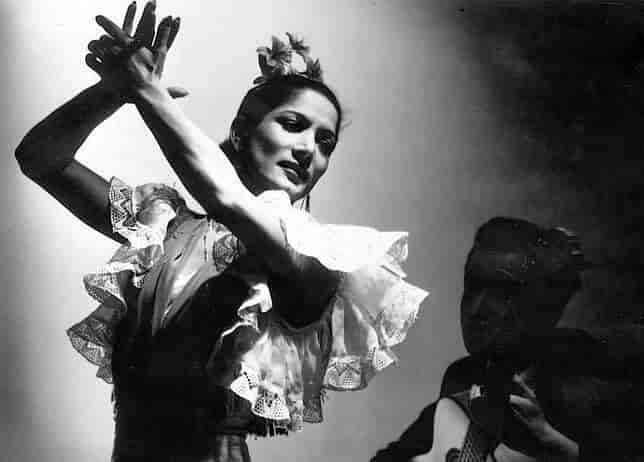
A dancer stepping out of darkness commands attention before moving a muscle. A singer sitting in a pool of warm light seems to occupy an entirely different world from the people watching. Even the guitarist, who spends much of the evening being unfairly ignored, acquires a certain mystery when half his face disappears into shadow.
None of this is particularly complicated.
And yet people manage to get it spectacularly wrong.
The Tourist Tablao Problem
There are some excellent tablaos in Spain. There are also some that appear to have been designed by a committee whose principal experience of flamenco came from a fridge magnet.
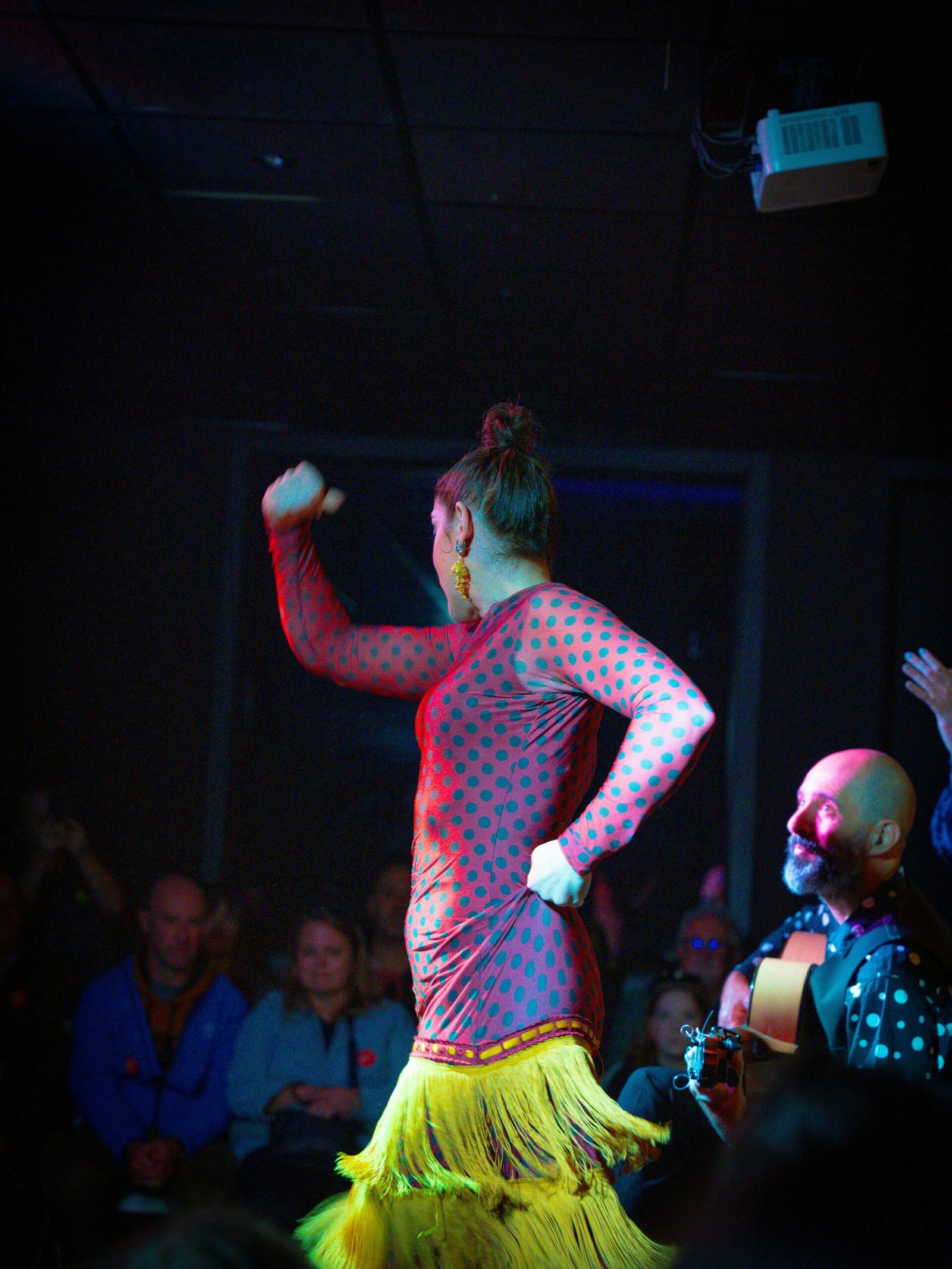
The costumes are immaculate. The chairs are arranged at exactly the right angle. The lighting turns purple, then red, then something resembling the interior of a nightclub in 1987.
Everyone looks magnificent.
Unfortunately, nobody seems terribly interested in what they’re doing.
I don’t object to theatrical flamenco. Quite the opposite. A beautifully staged performance can be extraordinary. The problem comes when the production starts doing all the emotional work.
If the dancer needs a smoke machine, three spotlights and a dramatic blackout to persuade you that something important has happened, I begin to wonder whether something important actually happened.
A good seguiriya doesn’t need assistance from the lighting department.
It needs someone capable of dancing it.
When Darkness Does the Work
There is a reason intimate flamenco performances can be so affecting.
You notice things.
The slight movement of a singer’s hand before a phrase. The guitarist shifting in his chair. The dancer waiting, absolutely still, while everyone else seems to have forgotten how to breathe.
In a large theatre, those moments can disappear.
In a small room, they become the entire performance.
Light has a peculiar ability to decide what matters. Too much of it and everything competes for your attention. Too little and you spend the evening wondering whether the dancer has fallen off the stage.
The trick is finding the point between the two.
Of course, modern lighting designers have made an entire profession out of this. There are sophisticated systems that can alter the mood of a room almost imperceptibly. In Britain, for example, a specialist lutron installer can create carefully controlled lighting scenes for homes and entertainment spaces.
It’s a rather wonderful idea, being able to change the atmosphere of a room without climbing onto a chair and fiddling with a lampshade.
Although I suspect the old gentleman who once told me that flamenco should be performed with ‘one chair, one guitar and no bloody nonsense’ would have had something to say about it.
He was probably right.
He was also sitting beneath a fluorescent tube that made him look vaguely green.
Flamenco Isn’t Supposed to Look Perfect
One of the things I love about flamenco is its refusal to behave itself.
A dancer can miss a step. A singer can begin a phrase that seems to have no intention of ending. Someone can shout ¡Olé! at precisely the wrong moment and receive a look that could strip paint.
It is gloriously human.
Overproduced lighting sometimes removes that humanity.
Every gesture becomes a picture. Every movement appears rehearsed to the nearest millimetre. The whole thing looks so polished that you begin to miss the possibility of disaster.
And disaster, within reason, is rather exciting.
I once watched a dancer recover from a moment of obvious confusion with such magnificent arrogance that half the audience probably thought it was deliberate.
There was no dramatic lighting cue.
Just a woman who knew exactly how to rescue herself.
That’s flamenco.
The Difference Between Watching and Feeling
I think this is what people mean when they talk about duende, although I hesitate to use the word too often.
It gets thrown around rather enthusiastically by people selling flamenco experiences, usually alongside promises of passion, authenticity and a complimentary glass of sangria.
Duende is not something you can order with your ticket.
Nor can you manufacture it by turning the lights down.
But the surroundings can make it easier to notice when something extraordinary happens.
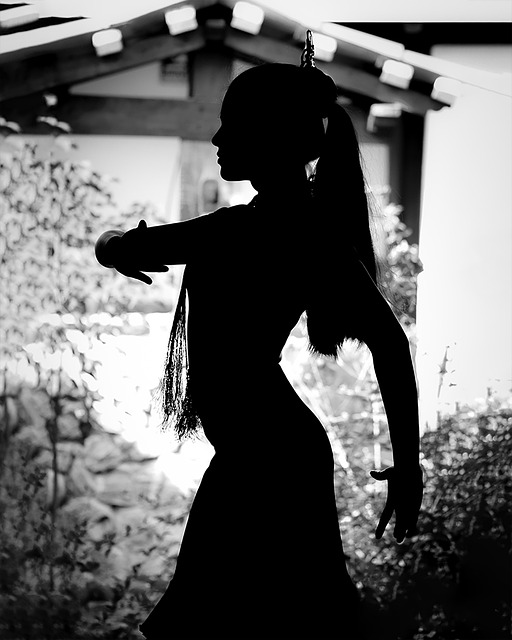
A darkened room removes distractions. A warm spotlight brings the performer closer. Shadows can make a familiar movement seem unexpectedly powerful.
Used intelligently, lighting gives flamenco room to breathe.
Used badly, it makes the whole thing look like a television talent competition.
And nobody needs another one of those.
Perhaps We Should Watch the Guitarist
Here’s an experiment for the next time you attend a flamenco performance.
Spend a few minutes watching the guitarist instead of the dancer.
Not all evening, obviously. That would be rather unfair to someone who’s spent three hours getting dressed.
But watch how the guitarist listens. How the rhythm shifts almost invisibly. How a tiny movement can change what happens next.
You may find that the most interesting person on stage is the one sitting in the least flattering light.
And perhaps that’s the real problem with our obsession with spectacle.
We become so busy looking at what we’re supposed to admire that we miss what’s actually happening.
Flamenco has always been rather good at exposing that sort of foolishness.
Leave a Little in the Shadows
I have nothing against beautiful theatres, expensive productions or clever lighting.
If somebody offered me a perfectly lit flamenco performance in a magnificent theatre, I’d be there before they’d finished the invitation.
But I’d also happily spend an evening in a slightly shabby room, watching three musicians and a dancer argue with the rhythm beneath a light bulb that should have been replaced sometime around 1994.
Because the best flamenco doesn’t depend on how much you can see.
Sometimes it’s about what you feel before you quite understand why.
And no lighting designer in the world can guarantee that.
Though I wouldn’t mind if somebody fixed the fluorescent tube.